





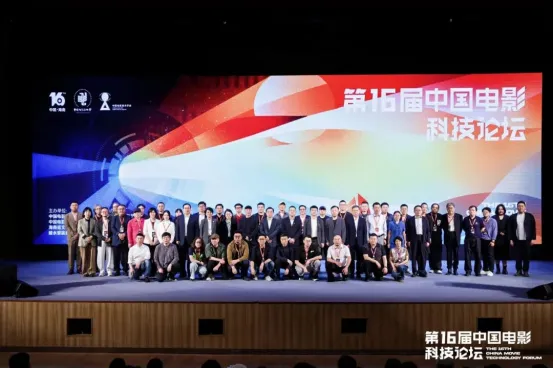
As the 120th anniversary of Chinese cinema is commemorated and the Hainan Free Trade Port approaches its island-wide customs closure operation, the 16th China Film Technology Forum was held in Lingshui, Hainan on December 7 and 8. The event was jointly hosted by the China Film Association and the Film Art Center of the China Federation of Literary and Art Circles, along with the China Film Art Design Society, the Hainan Federation of Literary and Art Circles, and the People's Government of Lingshui Li Autonomous County.
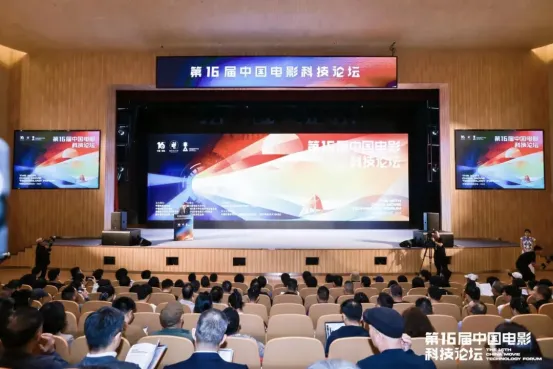
Deng Guanghui, Party Secretary and Resident Vice Chairman of the China Film Association; Chen Jiyang, Executive Deputy Director of the Publicity Department of the Hainan Provincial Party Committee and Director of the Provincial Film Bureau; and Luo Hua, Deputy Secretary of the Lingshui Li Autonomous County Party Committee and County Mayor, attended and delivered speeches. Also in attendance were Huo Tingxiao, Vice Chairman of the China Film Association and President of the China Film Art Design Society; Gong Bo, Party Secretary and Director of the China Film Science and Technology Research Institute; Zhang Hong, Director of the Film Digital Program Management Center of the Publicity Department of the CPC Central Committee; Huang Zhi, Director of the Technology Division of the Film Bureau of the Publicity Department of the CPC Central Committee; Wang Xiong, Vice Chairman of the Hainan Federation of Literary and Art Circles; Song Zhiqin, Director, and Wang Dan, Deputy Director of the Film Art Center of the China Federation of Literary and Art Circles; Zheng Shaoqun, Second-level Inspector of the Hainan Provincial Department of Commerce; and Wang Wenrong, Vice Chairman of the Sanya Municipal Committee of the Chinese People's Political Consultative Conference.
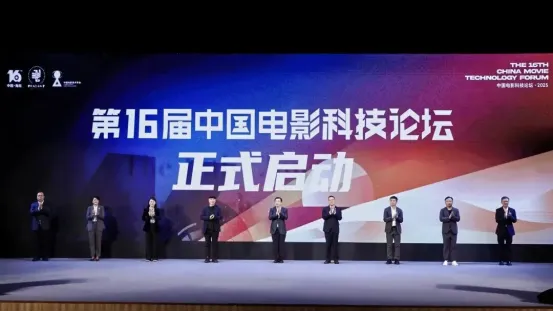
With the theme "AIGC: A New Wave of Film Technology," this edition of the forum invited experts, scholars, and enterprise representatives from the film, technology, and education sectors. It featured a launch ceremony, Lingshui film and television industry promotion, a lounge, keynote speeches, roundtable dialogues, an XR film exhibition, and other activities. The forum also released the "Analysis Report on the Application and Trends of Film Technology in China" and explored pathways for the deep integration of technology and film, facilitating the mutual promotion of new quality productive forces and artistic creation.
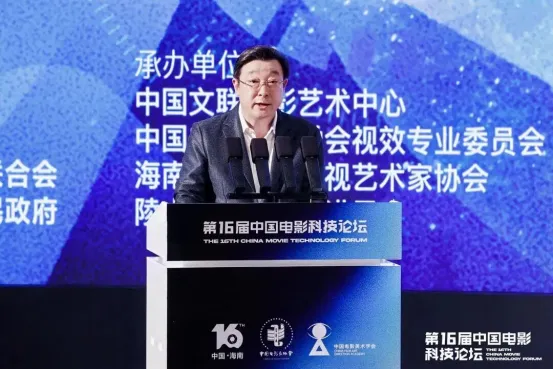
In his speech, Deng Guanghui pointed out that technology has always been a crucial engine for the development of film art and the industry. Every technological breakthrough reshapes the form of film, enriches artistic expression, and drives industrial development, while China's film industrialization and technological systems are also becoming increasingly refined. Deng Guanghui stated that the China Film Association will continue to adhere to value guidance and demand orientation, grasp the direction of film and technology integration, and deepen projects such as brand activities, creation support, and education and training. It will build a cross-border integrated talent pipeline, construct a full-chain digital ecosystem from IP transformation to production, screening, and promotion, and unite and lead film and technology workers to take new steps in the industrial ecosystem across all links of technology-empowered creation, production, dissemination, and experience.
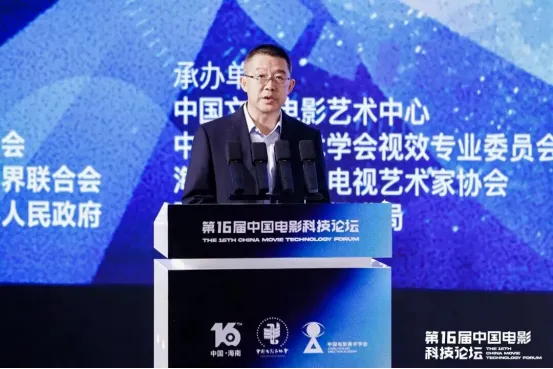
Chen Jiyang, Executive Deputy Director of the Publicity Department of the Hainan Provincial Party Committee and Director of the Provincial Film Bureau
In his speech, Chen Jiyang noted that Hainan is both a new hotspot for global investment and entrepreneurship, and a grand stage for the integration of diverse cultures. Taking the island-wide customs closure operation as a new starting point, Hainan will join hands with global filmmakers to empower creativity with technology, jointly build a convergence port for global outstanding culture, a dream port for cinematic creativity, and an innovation port for film technology, write more touching Chinese stories, and jointly draw a new blueprint for the film industry.
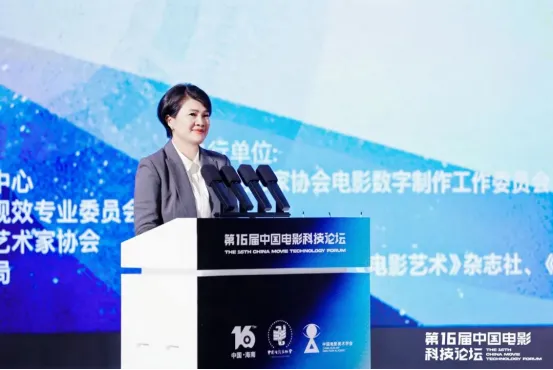
Luo Hua, Deputy Secretary of the Lingshui Li Autonomous County Party Committee and County Mayor
In his speech, Luo Hua stated that Lingshui is firmly seizing the historical opportunity of the Hainan Free Trade Port construction, making every effort to promote the deep integration of technology and creativity, and steadily advancing toward a new highland of film technology supported by a complete industrial ecology and cutting-edge technology. Lingshui will embrace change with openness, lead the direction with wisdom, and jointly explore the broad prospects of technology empowering art and innovation driving the future.
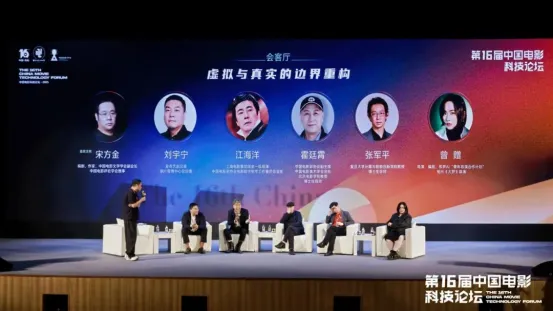
Lounge
The lounge invited Jiang Haiyang, Huo Tingxiao, Song Fangjin, Liu Yuning, Zhang Junping, and Zeng Zeng to engage in discussions centered on topics such as the reconstruction of the boundary between the virtual and the real, and to explore the efficiency of AI-assisted creative practices, motion generation, and environmental construction pathways.
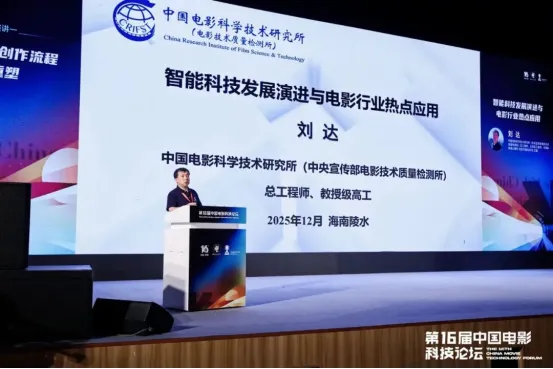
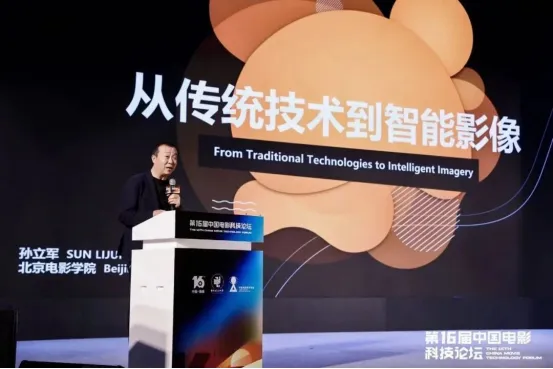
Keynote Speeches (Swipe left for more images)
The keynote speeches invited Liu Da, Sun Lijun, Shao Dan, Zhu Liang, Liu Xiaoqing, Zhang Bocheng, Han Zhong, Wei Jiankangkai, Zeng Dexiang, Quan Rongzhe, Jia Yunpeng, and Chen Yi. They focused on directions such as "AI and the Reshaping of the Film Creation Process," "Smart Production and Cost Reduction and Efficiency Enhancement: AIGC-Driven Transformation in Mid- and Post-Production," and "Film Engineers and Cross-Border Team Construction in the AIGC Era." They showcased the application outcomes of AIGC across the entire film workflow and proposed industry directions that use data to drive standardization, algorithms to enhance efficiency, and composite talent to support system upgrades.
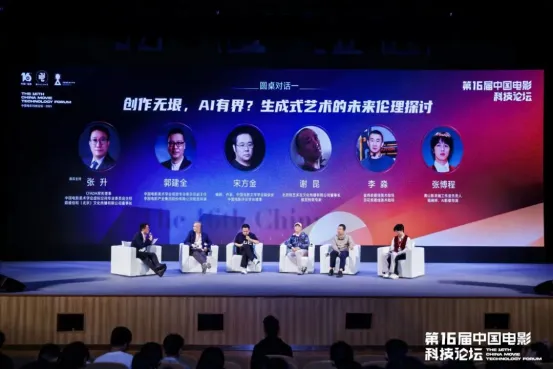
Roundtable Dialogues (Swipe left for more images)
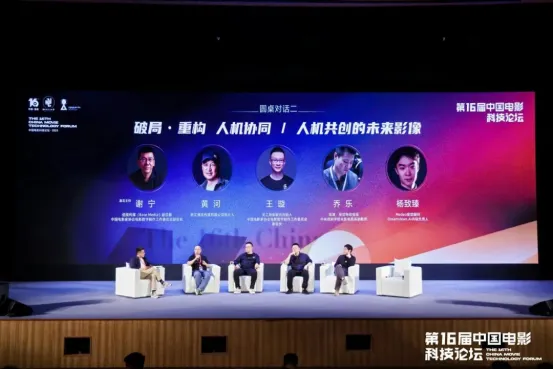
Three roundtable dialogues focused on cutting-edge industry issues. The dialogue on "The Future Ethics of Generative Art" invited Zhang Sheng, Song Fangjin, Xie Kun, Guo Jianquan, Li Miao, and Zhang Bocheng to propose countermeasures focusing on content safety, copyright protection, originality mechanisms, and data governance. The dialogue on "Human-Machine Collaborative Image Production Models" invited Xie Ning, Wang Xuan, Huang He, Qiao Le, and Yang Zhizhen to share cases of virtual shooting, CG production, and real-time rendering, and to explore the development directions of technical standard systems and creation interfaces. The dialogue on "Film Technology Empowering Regional Culture" invited Yang Sheng, Shao Dan, Chen Bo, Dong Zhen, and Chang Huiqin to focus on cultural tourism IPs, virtual scenic spots, and immersive experiences, exploring innovative pathways for technology to assist cultural expression and regional brand shaping.
During the forum, an XR film exhibition was specially held, utilizing various forms such as large-space interactive experiences and standalone VR to attract attendees and film audiences to immersively experience the application outcomes of film technologies—including AI generation, virtual shooting, and interactive imagery—across multiple scenarios and dimensions. Additionally, a Lingshui film and television industry promotion was held, comprehensively showcasing Lingshui's advantages and sincerity in developing the "film and television + technology" industry across dimensions such as policy support, talent services, and supporting facilities.
This edition of the forum focused on enhancing academic quality, conducting in-depth research into the current status of the industry, systematically reviewing the application, practical pathways, and development trends of film technology in China and abroad over the past three years, and meticulously compiling and releasing the "Analysis Report on the Application and Trends of Film Technology in China" to provide practical references for film technology application and industrial development.
Although the 7th Hainan Island International Film Festival (HIIFF) has concluded, the film screenings continue.