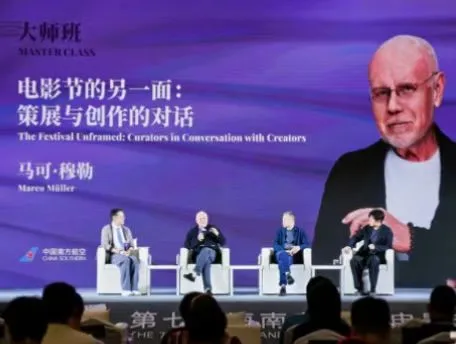




On December 7, the 7th Hainan Island International Film Festival held its second masterclass: "The Other Side of Film Festivals: A Dialogue Between Curation and Creation" with Marco Müller, President of the Golden Coconut Awards Competition Jury, in a relaxed yet thoughtful atmosphere. The masterclass was moderated by Zheng Zhaojun, an independent film journalist, host and film event planner. The keynote speaker was Marco Müller, the renowned Italian film producer, scholar and curator who chairs this year's Golden Coconut Awards Competition Jury. He was joined in conversation by film scholar Li Xun, Artistic Director of the Hainan Island International Film Festival, and young director Liang Ming, for an in-depth discussion of the logic, challenges and future of festival curation.
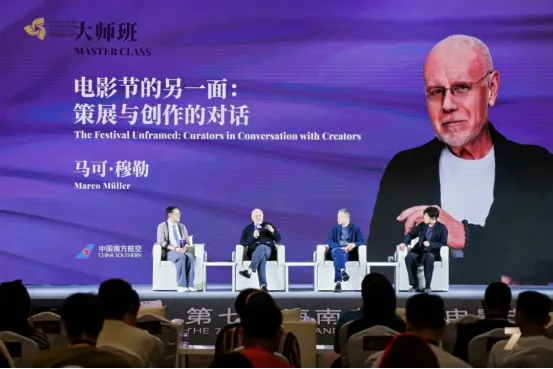
At the masterclass
Curation: Balancing Past and Future
Marco Müller opened by noting that curation is far more than "picking films"; it is an "art of balance" that requires both a historical view and insight into the future. "On the one hand, curating means choosing outstanding films that already exist in the market and in the production environment. On the other hand, it must look to the future. By 'future' I don't mean project markets in the usual sense, but building a platform where directors can truly show their individuality and their creative ambitions."
Drawing on his experience at the Locarno Film Festival, he said a festival should work like a full-scale mock-up in architecture, magnifying the cinematic phenomena of the moment within a limited time and helping audiences see more clearly the works and regions that deserve attention. In this process, the curator has to make judgments: "this is more important than that", "this director deserves more attention than that one". Such choices are not meant to create hierarchies but to highlight the diversity and vitality of film culture.
Li Xun added that curation at today's festivals has long gone beyond selecting films and has become a key link in film distribution and industry development. He pointed in particular to the revival of collective filmmaking: from Europe to South America and Asia, filmmakers are working collectively to lower costs and spark creativity, a direction festivals should follow and support.
The "Tribes" of Cinema
In conversation, film scholar Li Xun, Artistic Director of the Hainan Island International Film Festival, said that HIIFF pays close attention to collective filmmaking. The festival has followed Argentina's El Pampero Cine and the American collective Omnes Films, for example. Collective filmmaking is practiced worldwide, from Europe to South America and East Asia. It lowers costs, helps filmmakers work together and blends individual styles toward a shared goal, which makes it a very effective model.
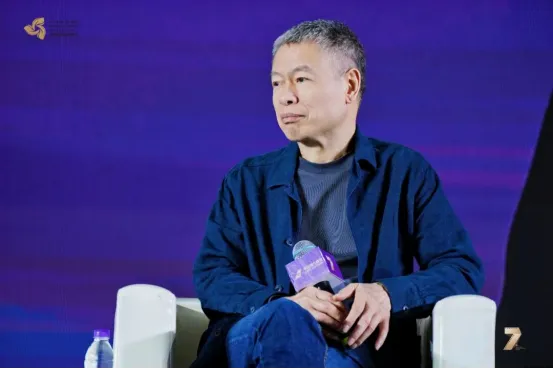
Marco Müller responded that he prefers the word "tribe" to "collective", because it suggests greater inclusiveness and protects each member's creative individuality. He cited Mariano Llinás, another member of this year's Golden Coconut Awards jury and a leading figure of El Pampero Cine: "Do you know how long his best-known film, La Flor, runs? Thirteen and a half hours! In his tribe, nobody says, 'Sorry, we don't have the budget for this kind of excessive self-expression; you have to focus, you have to keep it under control!' You really can experiment in all kinds of ways."
Marco Müller also believes festivals have a similar mission in supporting creative individuality. Their task is not to "cultivate" audiences but to "find" the audiences willing to embrace something new. "We have to find ways to draw audiences into unconventional experiences. The audience is there; the key is how to reach them."
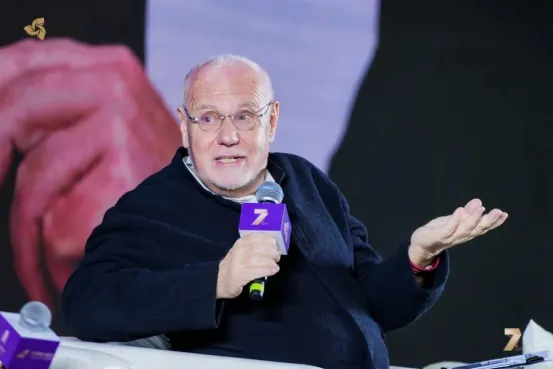
He went on to say that young audiences often know cinema from the Global South only through commercial genre films. Festivals can build sections that combine genre and auteur cinema, for example using innovative horror films as an entry point, to gradually lead audiences to works such as Indian independent productions and new Latin American cinema and broaden their viewing experience.
Speaking as both a filmmaker and a viewer, Liang Ming echoed this view. Recalling his experiences at festivals in China and abroad, he said: "As a director, I have taken my films to quite a few festivals. I have a strong feeling that it is not my team and I taking the film to an unfamiliar country, but the film taking us to meet local audiences." At the same time, many friends who never follow festivals see them merely as a platform for insiders, which shows a gap between festival activities and public perception that still needs to be bridged.
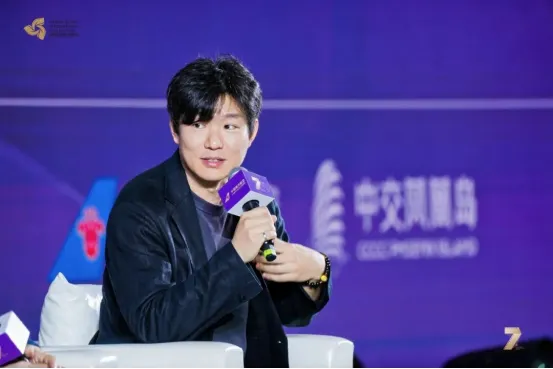
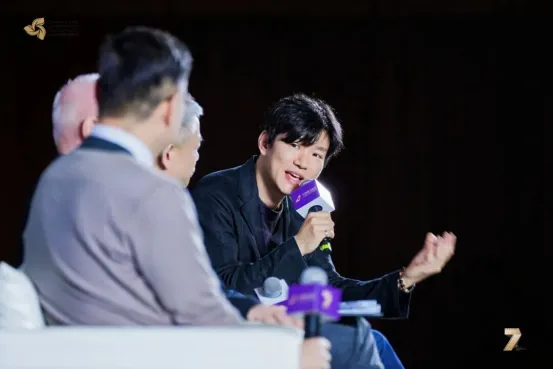
Liang Ming
"Chinese Cinema Is Extremely Diverse"
As a long-time observer and champion of Chinese cinema, Marco Müller stressed that "Chinese cinema" should stand for diversity rather than a single image. "Every time we say the words 'Chinese cinema', we have to realize that behind them lie many very different experiences, currents and directions. It is not simply a matter of the mainland, Hong Kong, Macao and Taiwan, but of countless directors trying new things in style."
He recalled the 1994 Venice Film Festival, where the Golden Lion went to Tsai Ming-liang's Vive L'Amour, Best Actor went to Xia Yu, star of In the Heat of the Sun, and the Golden Osella for Best Cinematography went to Wong Kar-wai's Ashes of Time. Films from across the Chinese-speaking world won at the same time, revealing very different sides of Chinese cinema. "From that year on, all the distributors suddenly understood that Chinese cinema has many faces, and that there are many Chinese cinemas that are completely different from one another."
He also mentioned publishing books on Chinese cinema in Italy in the 1980s. For a long time these were almost the only systematic writings available abroad on China's Fifth and Sixth Generation directors, and their influence was far-reaching.
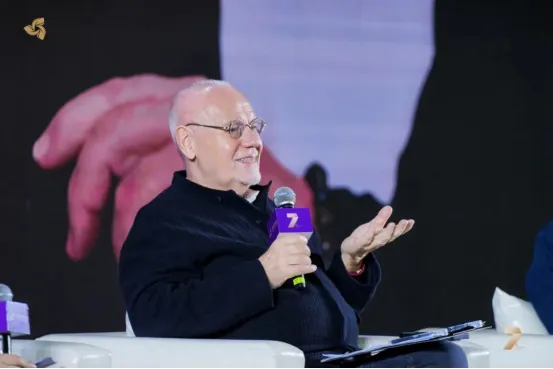
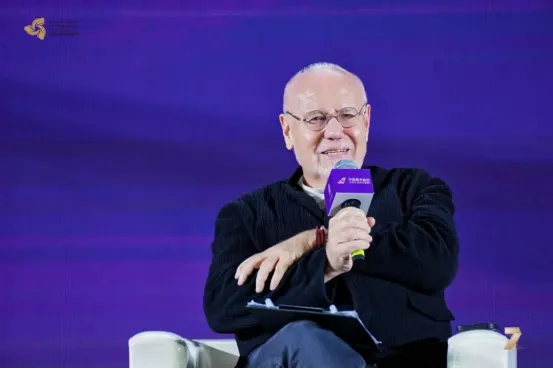
Marco Müller
Li Xun said that talking about Chinese cinema in general terms rarely sparks the interest of international audiences. Art history shows again and again that people remember authors, directors and artists before nations or ethnicities. To bring Chinese cinema to the world, there must be outstanding directors whom international audiences will remember. As the last major international film festival of the year, HIIFF has always focused on discovering talented and promising directors, including both those who have proven themselves at major festivals during the year and those not yet discovered by the festival circuit.
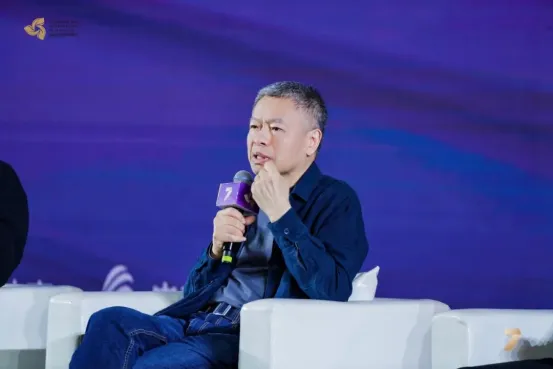
Liang Ming paid tribute to Marco Müller through his own experience: "The more I get to know Mr. Marco Müller, the more I feel his sincere love for Chinese cinema. My first film received its first honor thanks to his support, and my second film reached international audiences through his recommendation. Once he believes in your work, he goes out of his way to recommend it to people at major international festivals, writing to them to say there is a Chinese-language film they should pay attention to."
When Liang Ming began serving on festival juries himself, he carried on this passion for good films: "I tell myself that I cannot choose based only on my own taste. If I did, the choice would be one-sided and not rich enough."
The masterclass ended with warm applause. From the perspectives of curator, scholar and filmmaker, Marco Müller, Li Xun and Liang Ming together sketched the many roles of a film festival as a cultural platform, an industry driver and a bridge to audiences. Curation is not only selection and programming but an ongoing dialogue between history and the future, commerce and art, audiences and filmmakers. As cinema grows ever more diverse and audiences keep changing, a festival may need to be a prism of this kind, shedding light on overlooked corners and reflecting our most genuine love of and hopes for cinema.
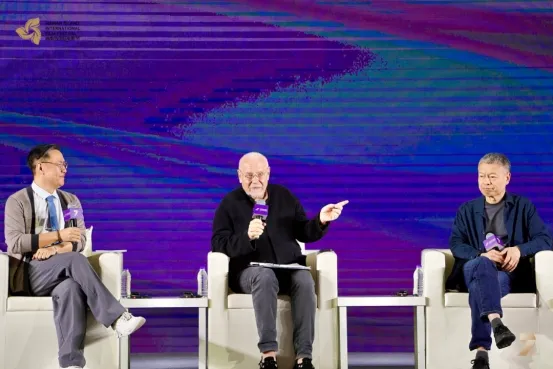
At the masterclass
Related Articles