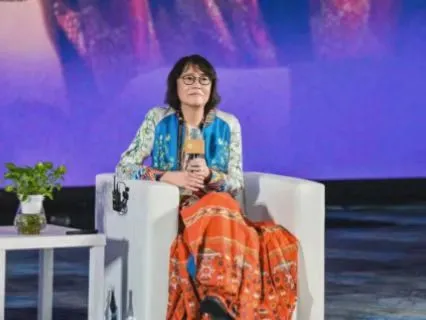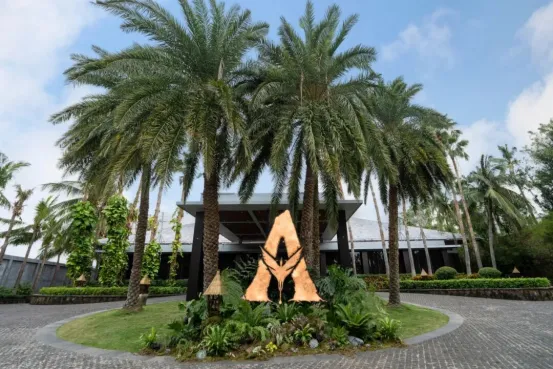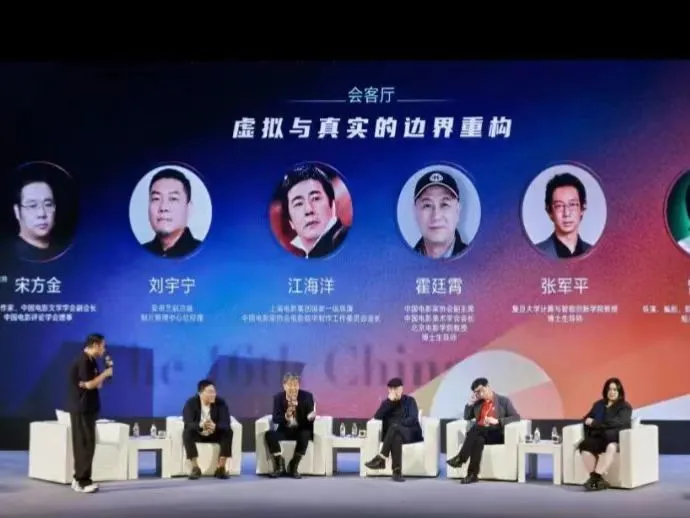





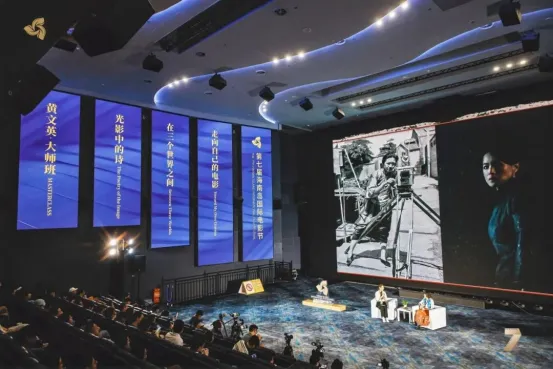
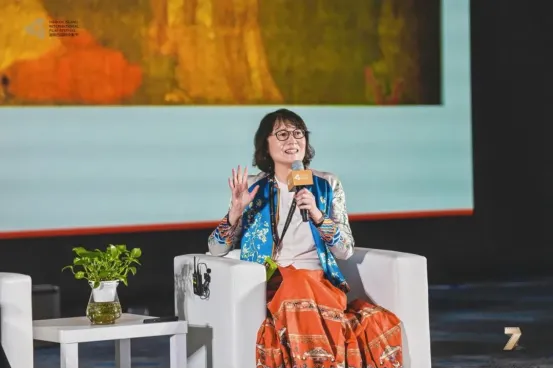
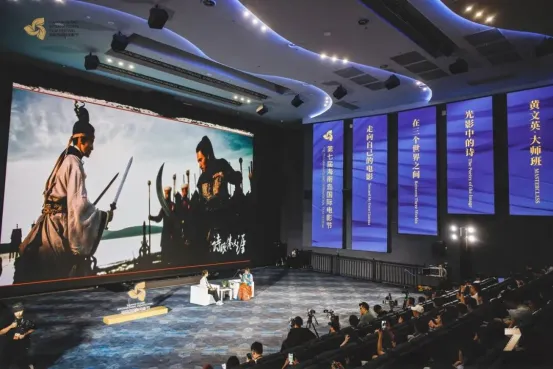
On the morning of December 5, 2025, the Masterclass of the 7th Hainan Island International Film Festival (HIIFF) was held at Sanya Xingyue Cinemas. Themed "Poetry in Light and Shadow: Between Three Worlds, Towards One's Own Cinema," this Masterclass specially invited renowned art director, costume designer, and director Huang Wen-ying as the keynote speaker. Xiao Nan, author of Tencent News' "Thinking Out Loud," film planner, media professional, and film critic, served as the moderator. Drawing on her representative works The Assassin, The Weary Poet, and Wild Times, as well as her personal directorial work Only Love You, Huang Wen-ying shared her aesthetic reflections and practical insights gained from navigating between different cinematic worlds.
A Scroll of the Late Tang Dynasty: Historical Restoration and Cultural Purification in The Assassin
The Masterclass began with Hou Hsiao-hsien's The Assassin, which marks its tenth anniversary this year and represents the historical world where Huang Wen-ying pursues the "restoration of life." Huang Wen-ying recalled her decade-long preparation and collaboration with director Hou Hsiao-hsien. She emphasized that to restore the texture of life in the late Tang Dynasty, she conducted extremely in-depth historical research and field visits. Leveraging the rich collections of the National Palace Museum in Taipei and following the clues of the ancient Silk Road, she traveled multiple times to Uzbekistan and other places to conduct on-site investigations of Tang Dynasty remnants and traces of East-West cultural exchange. This decade-long process of data collection and travel was regarded by her as a profound "cultural purification," endowing the creation with a deep humanistic foundation.
In terms of specific art design, Huang Wen-ying focused on extracting slices of life from ancient paintings and poetry to restore details valued by the Tang people, such as the art of incense, floral art, and textiles. In the film, numerous screens, furniture, and even building timber were made to be as authentic as possible, with specific woods selected from thousands of miles away. She pointed out that the vitality of a set lies in its integration with the actors' activities, and every detail—including 500 bionic peonies crafted to match the season—jointly constructs a credible Tang Dynasty space. The tacit understanding from her long-term collaboration with director Hou Hsiao-hsien was built on extreme professional trust, which made her deeply realize the responsibility borne by an art director as the key role who "must be responsible for spending one-tenth of the budget before filming even begins."
The Martial Arts Jianghu: Potential Stimulation and Style Collision in The Weary Poet
Huang Wen-ying's second world is constituted by the martial arts jianghu, represented by the Yuan Dynasty-set martial arts film The Weary Poet, directed by Xu Haofeng. Huang Wen-ying admitted that there was only half a month from receiving the assignment to the start of filming, making it a challenge to stimulate her potential in an extremely short time. She highly praised director Xu Haofeng's script as one of the best texts she had ever received in her film career; its writing is concise yet highly visual, capable of precisely delineating the characters' colors and personalities.
Huang Wen-ying stated that when constructing this martial arts world of "barbaric civilization," she made bold breakthroughs in costume design, creating styles such as sleeveless designs that challenged traditional period costume concepts, and she needed to persuade the actors to trust these designs to better immerse themselves in their roles. Unlike the relatively relaxed creative process of The Assassin, The Weary Poet required adapting to a more industrialized and streamlined production management system, which led her to complete the work with a more rigorous mindset, "feeling like a fresh graduate just entering society."
Contemporary Consciousness: Sensory Experiment and Spanning Eras in Wild Times
Another major focus of the Masterclass was Bi Gan's Wild Times, which represents another world pursued by Huang Wen-ying—the world of contemporary consciousness. Huang Wen-ying served as the costume designer for the film, which spans a century of Chinese history and narrates through five sensory chapters. She revealed that she initially received only a one-page text outline, requiring immense imagination to construct the looks spanning different eras. One of her core tasks was to design, for actor Yi Yangqianxi who appears throughout the film, transformative and sufficiently groundbreaking looks for every twenty-year interval.
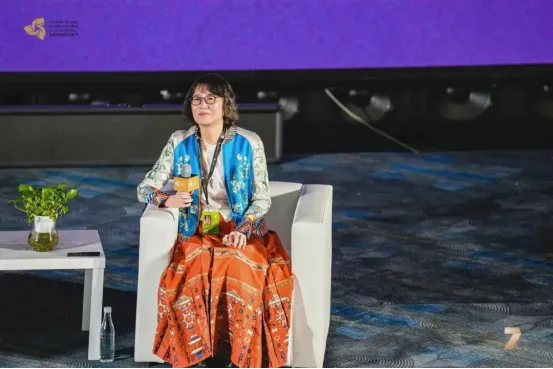
Huang Wen-ying shared the months-long intensive discussion process with director Bi Gan, as the two constantly drew inspiration from the atmosphere of the times. For example, the look of the female lead Shu Qi in the 1920s silent film segment was inspired by the images of early Chinese female photographers. In terms of color selection, the team conducted extensive fabric tests, ultimately settling on specific tones to present the optimal grayscale effect in black-and-white photography. The extremely challenging "one-take" shooting in the film required the costume team to quickly change outfits for hundreds of background actors within a very short time without any margin for error; she emphasized that this is precisely the detail that reflects whether a film is made with dedication.
Towards Auteur: The Directorial Transition and Original Intention in Only Love You
Transitioning from art director to director, Huang Wen-ying shared the creative journey of her directorial debut, Only Love You. The film's story originates from her family history, particularly the turbulent experience of her grandfather running a hotel in Chiayi and its influence on his granddaughter's outlook on life. She admitted that her father's passing prompted her to make a firm decision to fulfill her directorial dream. The film's funding did not come from the industry, but rather from the spontaneous support of fifteen old classmates, making her deeply feel the preciousness of friendship.
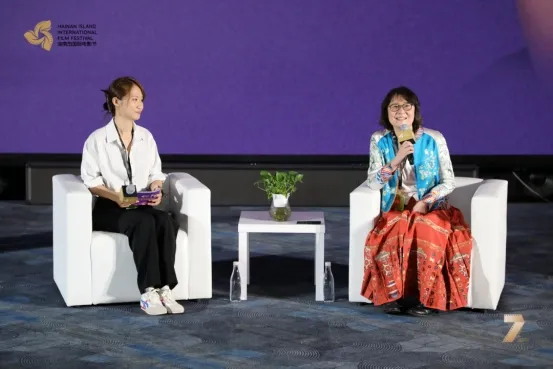
Huang Wen-ying believes that her long-term experience as an art director has been immensely helpful in her directorial work, especially in location scouting, visual storytelling, and team collaboration. She also realized that a director requires more comprehensive coordination skills, including on-set direction, communication with cinematographers and actors, and post-production. She specifically pointed out that for new directors, finding a like-minded producer who is considerate of the creative process is crucial, as this ensures the work is completed in a favorable environment. She encouraged young directors to ensure they capture all necessary footage during shooting, because "a miss is as good as a mile."
Consistency: Details as the Core, Openness as the Mindset
Reflecting on her creations spanning different styles and eras, Huang Wen-ying summarized that the core lies in her persistence in "details"—whether it is historical research, the restoration of life scenes, the selection of costume fabrics, or communication with actors and the styling control of background actors. She believes that it is these details that jointly forge the texture of the imagery and the credibility of the world.
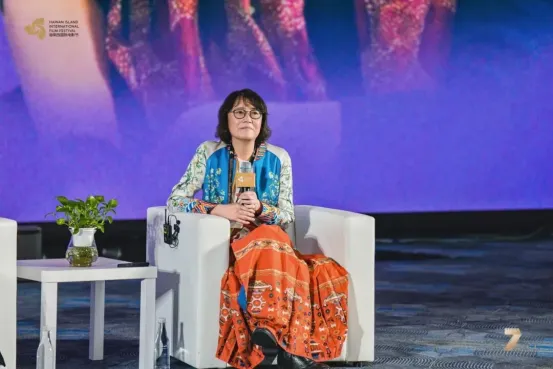
Looking ahead, Huang Wen-ying stated that she is eager to collaborate with young directors and will continue to prioritize script quality as her primary criterion for taking on projects. She is currently preparing her second directorial work while also assisting other young filmmakers. She encourages creators to always maintain an open mind and a calm demeanor, approaching every new cinematic world with the curiosity of a beginner, allowing their imagination to roam freely, striking a balance between "the restoration of life" and "the fantasy of art," and continuously exploring that "poetry in light and shadow" that belongs to cinema.
Related Articles