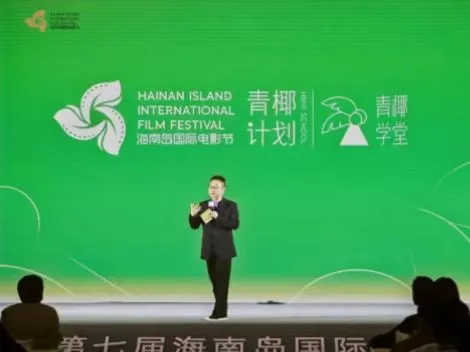






On the afternoon of December 9, the Youth Creative Forum of the Young Coconut Project at the 6th Hainan Island International Film Festival (HIIFF) was successfully held at the conference hall of Sanya Kangnian Hotel. Hosted by Xu Jiahan, the forum centered on in-depth discussions regarding the development and future of young filmmakers. Numerous seasoned film professionals and young directors gathered to share experiences and exchange ideas, providing valuable insights and guidance for the growth of young filmmakers.
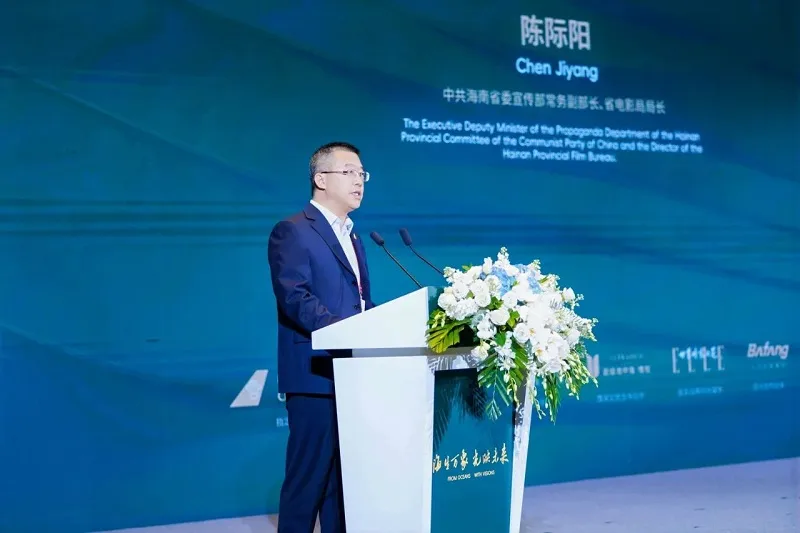
Chen Jiyang, Executive Deputy Director of the Publicity Department of the CPC Hainan Provincial Committee and Director of the Provincial Film Bureau
At the beginning of the forum, Chen Jiyang, Executive Deputy Director of the Publicity Department of the CPC Hainan Provincial Committee and Director of the Provincial Film Bureau, delivered a speech. He pointed out that the Young Coconut Project has demonstrated strong vitality and potential within the festival, with numerous young creators actively responding and embarking on new journeys of film creation on the charming land of Hainan, fully reflecting Hainan's regional characteristics. He emphasized that the Young Coconut Project provides fertile soil for film creation, promotes the integration and innovation of film art with other art forms, and achieves multi-dimensional development that takes root in Hainan's culture while reaching upward to pursue cinematic dreams. At the same time, he issued an initiative to young filmmakers, hoping they would take "Shoot in Hainan, Shoot Hainan" as an opportunity, leverage Hainan's policy advantages and natural and cultural resources, create more outstanding works, and inject new momentum into the prosperity of Hainan's film industry.
Mentor Perspective:
The Unique Value of the Young Coconut Project and Unearthing the Potential of Young Filmmakers
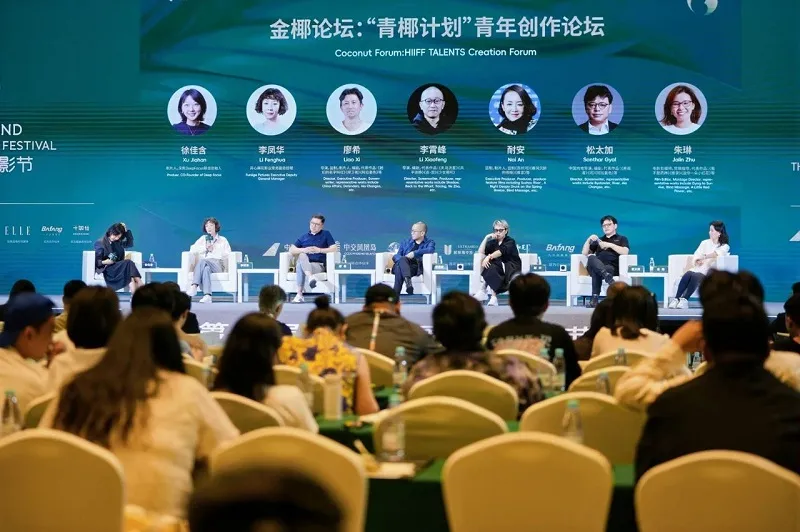
During the roundtable dialogue, the mentors discussed various aspects of the Young Coconut Project and shared their impressions of the participants.
Director and screenwriter Li Xiaofeng pointed out: "The biggest characteristic of the Young Coconut Project is its boldness; it dares to provide financial support to the top 8, enabling creators to quickly turn their ideas into actual works." He also stated, "Youth is capital; you have the right to present the truest and most courageous things, and you are allowed to make mistakes. This is my deepest impression of the participants."
Executive producer and producer Nai An emphasized: "Providing 120,000 yuan in filming funds directly to the winning 8 short film projects is extremely important, and it is the main reason I participated." She also stated, "The participants are exceptionally serious and cherish this opportunity. They discuss every version with me, from the script to the final film, and put in tremendous effort within a tight timeframe, showing me the hopeful future of Chinese cinema."
Director and screenwriter Song Taijia added: "The project not only provides funding but also gives creators trust and a platform, completing the process from text to image under the supervision of the festival, which is invaluable for young directors." Referring to the internal industry screening, he said, "The diverse genre creations from different perspectives are very interesting, and the sparks they generate are surprising."
Film editing supervisor Zhu Lin said: "The festival staff communicated deeply with me about the history and vision of the Young Coconut Project, which made me feel that this endeavor is particularly meaningful. Real financial support and professional guidance help young directors grow." She also noted, "During the process, the participants showed firm will and strong learning abilities. After the training courses and mentor guidance, their scripts underwent significant adjustments, and their aesthetic sense improved rapidly, which I greatly appreciate."
Market Demand and Collaboration:
Helping Young Directors Achieve Success
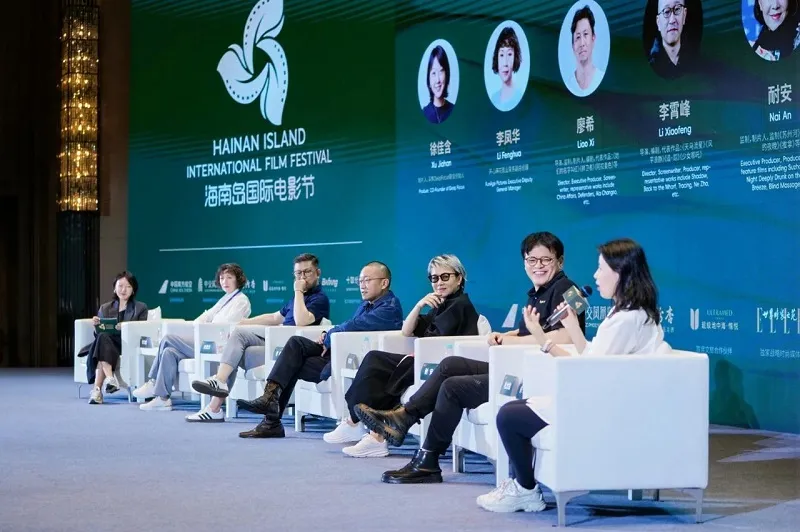
Regarding market expectations for young directors and how to collaborate with investors, the guests also shared their respective insights.
Young Coconut Project judge Li Fenghua, Executive Deputy General Manager of Mahua FunAge Pictures, starting from the market perspective, emphasized that young filmmakers must cultivate their perception and acuity of the market and actively accumulate experience across the entire film production process. Using Mahua FunAge's "New Director Support Plan" as an example, she introduced how to help young directors clarify their comedic style and strengthen their creative abilities, encouraging them to showcase their talents in the commercial film sector. "We hope young directors accumulate market perception during their creative process, participate in film production through various means, and gain experience, so that they can create works well-received by audiences."
Young Coconut Project judge Liao Xi, who is a director, executive producer, producer, and screenwriter, stated that the industry expects diverse types of directors, and whether they are directors of art films, literary films, or genre films, they all have room for development. During the review process, he found that some directors were too conservative; in fact, as long as a work has highlights, the director is a moldable talent. "We hope to discover talented young directors; during the review, even if just one thing moves us, they are a moldable talent."
Nai An pointed out that the current market is not lacking in certain specific types of directors; the key is how to help them be discovered and recognized by the market, where executive producers and producers play an important role. "The market does not lack a certain type of director; what it lacks is the ability to help them be discovered by the market."
Creative Challenges and Responses:
The Perseverance and Breakthroughs of Young Directors
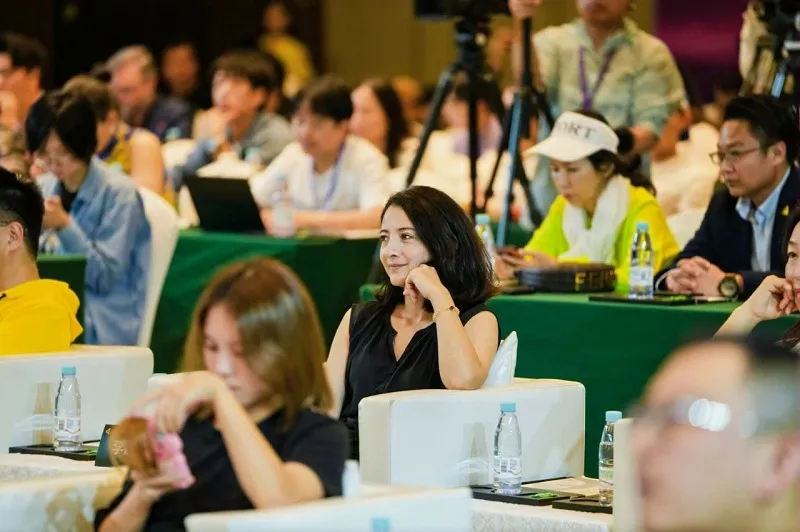
In the creative process, young directors face numerous challenges. Song Taijia advised young people to maintain their original intentions when facing the market and avoid over-catering to it. They should focus on saving costs for their first two works, which allows them to more freely adhere to their creative concepts. "Saving costs allows young people to maintain freedom in the early stages of their careers)creation, persist in their individuality, and avoid losing their original intentions by over-catering to the market."
Li Xiaofeng shared his own experience of transitioning from personal expression to genre film creation. He admitted that this process was painful, but it also gave him a renewed understanding of film creation. He emphasized that directors need to find a balance between artistic pursuit and market demand, while also calling on the industry to respect the creativity of every role and enhance the soft power of the film industry. "The transition from personal expression to genre film creation is painful, but it also taught me a lot. Directors must balance art and the market, and the industry should also respect the creativity of every position."
As a producer, Liao Xi emphasized the importance of respecting the creative vision of young directors, providing support in terms of financing and core crew pairing while avoiding excessive interference in the creative process. "I will help the director with financing and the core crew, but I will not interfere too much with the creation, respecting the director's artistic expression."
Nai An compared the differences between domestic and international projects, pointing out that the boundary between art-house and commercial projects in the domestic film market is blurred, which brings greater challenges to executive producers and producers, requiring solutions for cooperation with the market and investors. "There are differences between domestic and international projects in their relationship with the market. In the domestic market, the boundary between art-house and commercial projects is unclear, which brings greater challenges to executive producers and producers."
Zhu Lin pointed out that young directors are susceptible to external interference at various stages of creation and need to strengthen their convictions. She called on executive producers and producers to firmly support directors at critical stages, while also expressing her willingness to provide help when needed. "Young directors are vulnerable during the creative process and need support from all sides. I will do my best to provide help when the director needs it."
Li Fenghua emphasized the importance of communication between young directors and market capital. She believes that communication is a two-way street; young directors should maintain a calm mindset, engage with different teams, summarize their experiences, and have a clear understanding of their projects. "When communicating with investors, young directors should maintain a calm mindset, interact with various teams, sum up their experiences, and have a clear understanding of their projects."
Experience Sharing by Young Directors:
Growth and Reflections on the Venture Journey
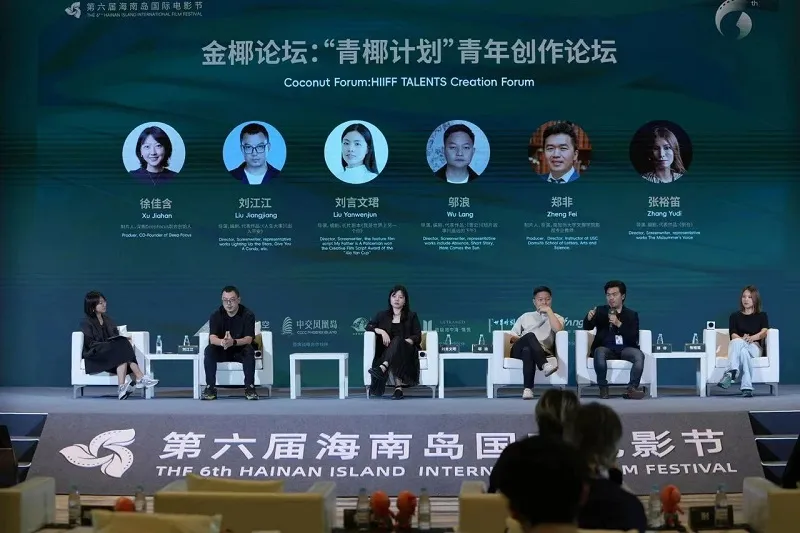
In the second half of the forum, several young directors who stood out from the venture financing shared their experiences.
Young Coconut Project jury member, director, and screenwriter Liu Jiangjiang recounted his arduous journey transitioning from the television industry to film creation. He started writing scripts and participating in venture financing in 2017, and after years of effort, he finally gained recognition with Vida. He said with emotion: "Venture financing is not an easy process to knock open the door of trust, but if you keep at it, you will eventually be discovered. Today is an era where gold will always shine." He emphasized that when communicating with investors, one should build their confidence while preparing for a protracted battle. "In the process of dealing with investors, you need to make them believe in you. This requires continuous effort. The process is long, but you must have patience."
Young Coconut Project jury member, director, and screenwriter Liu Yanwenjun shared her experience in choosing a venture financing platform. Initially, she chose venture financing due to financial factors, but later realized the importance of sincerity in creation. She suggested that young directors shoot more short films to find their suitable mode of expression through them, and to balance creation with market demands. "I initially chose venture financing for the funding, but later I understood that sincere creation is very important. Young directors can shoot more short films to find a balance between self-expression and the market."
Young Coconut Project jury member, director, and screenwriter Wu Lang embarked on a path of film creation after graduating from the sculpture department. He gained attention by participating in the Shanghai International Film Festival's venture financing in 2019, which launched his creative journey. He believes that preparing sample reels before venture financing helps showcase one's abilities and attract funding and partners. "Preparing a sample reel before venture financing can better showcase yourself and attract resources. When participating in venture financing, you should be clear about your needs and make adequate preparations."
Director and screenwriter Zhang Yudi stated that participating in venture financing not only secured funding but also allowed her to meet many valuable partners. She believes that short films are significant for feature film creation, serving as field research to find creative content. She also advised young directors not to overly pursue the refinement of short films, but to focus on instinctual expression and practice shooting more. "Short films are of great significance to feature film creation and can serve as a source of inspiration. Young directors should not overly pursue refinement in short films, but should focus on instinctual expression."
Learning from International Experience and Discussing Industry Phenomena:
Expanding the Horizons of Young Directors
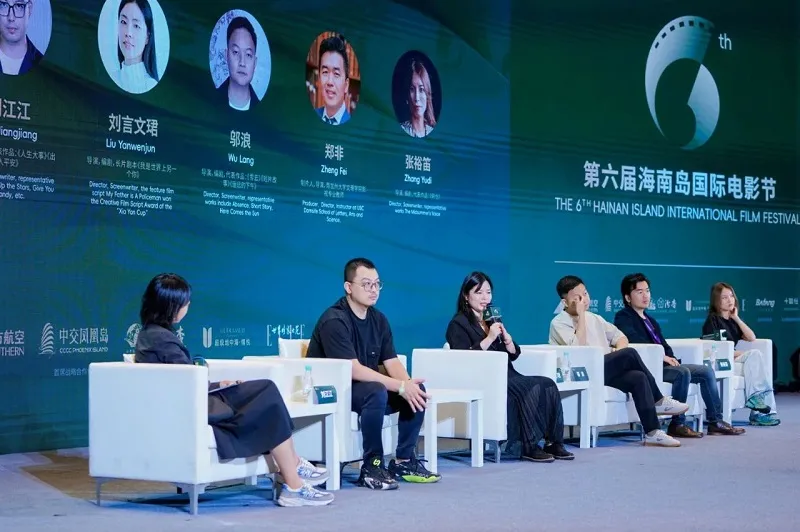
Producer and director Zheng Fei introduced the venture financing and career development of young filmmakers abroad. He stated that young international filmmakers typically use their graduation works as a stepping stone to participate in film festivals, and if they attract attention, they need to prepare a feature film script. Although the support from film festival venture financing is not as strong as domestically, the agent system serves as a bridge between directors and investors. "Graduation works are very important for young international filmmakers. After participating in film festivals, they need to prepare feature film scripts, and the agent system helps them connect with investors."
When discussing industry phenomena, Liu Jiangjiang pointed out that film directors must constantly struggle with their pride. Facing judgments from all sides, they should maintain a strong mentality. "Film directors' work faces a lot of judgment; they need to struggle with their pride, and maintaining a strong mentality is very important."
Liu Yanwenjun stated that she currently encounters many difficulties outside of creation, such as gaining investors' trust, finding suitable partners, and pitching her works. "Apart from creation, making investors trust you, finding partners, and pitching works are all very difficult. This is my dilemma at the current stage."
Wu Lang shared his perseverance and confusion during the creative process. He compared creation to flying a kite, saying one must hold the string tightly and not be interfered with by the outside world. "Creation is like flying a kite; you must grasp your own direction and not be swayed by the outside world. Perseverance is very important."
Zhang Yudi emphasized the sense of loneliness during the creative process. She believes that the companionship of a team and other creators is needed, and that inspiration can be gained by communicating with different people. She hopes for more opportunities to communicate and absorb energy from others. "Creation is very lonely; it requires the companionship of a team and others. Communicating with different people can provide inspiration, and I hope for more opportunities to communicate."
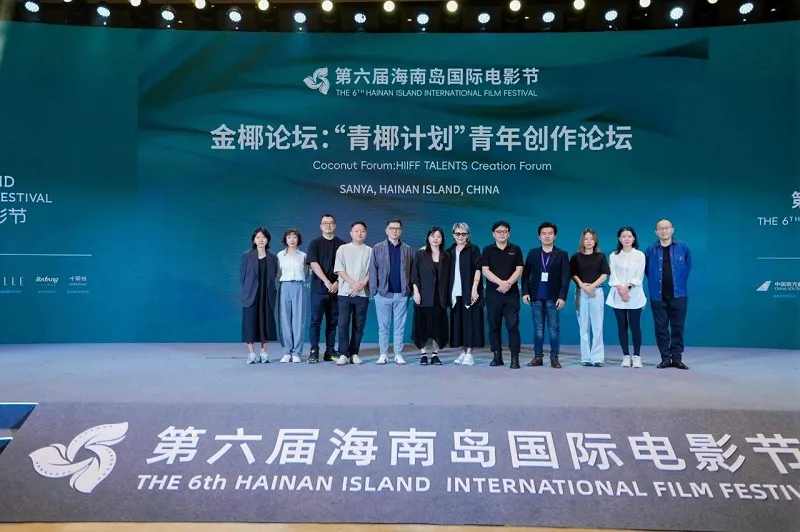
This Young Coconut Project Youth Creative Forum provided a valuable exchange platform for young filmmakers. Through in-depth discussions on the driving role of venture financing activities for young filmmakers, market expectations, as well as creative dilemmas and coping strategies, it pointed out the direction for the growth of young filmmakers. It is believed that with the support of the Young Coconut Project, young filmmakers will continue to advance on the path of film creation, bringing more innovation and vitality to the film industry, and jointly propelling the Chinese film industry to new heights.