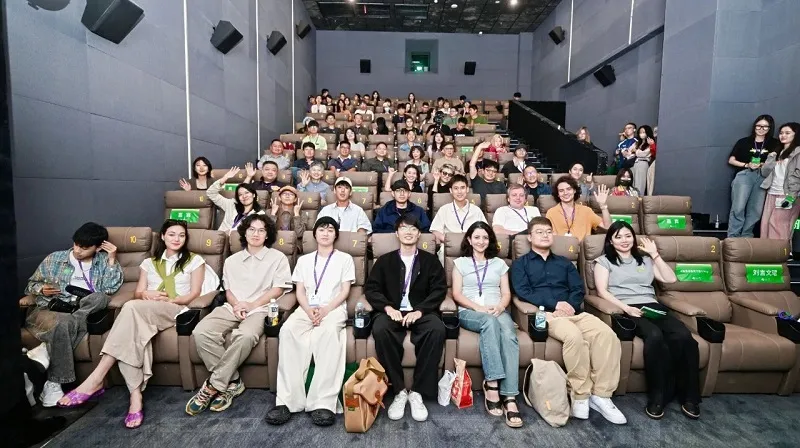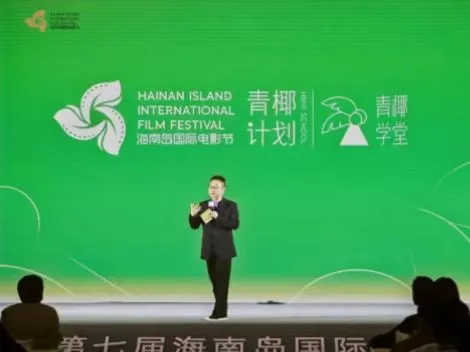






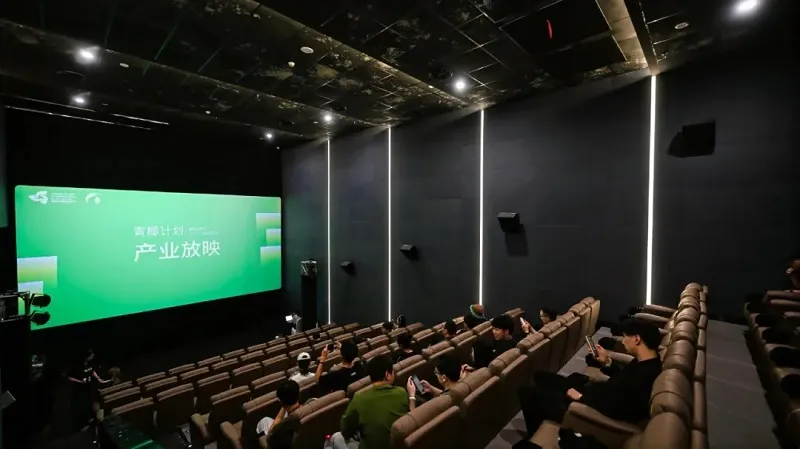
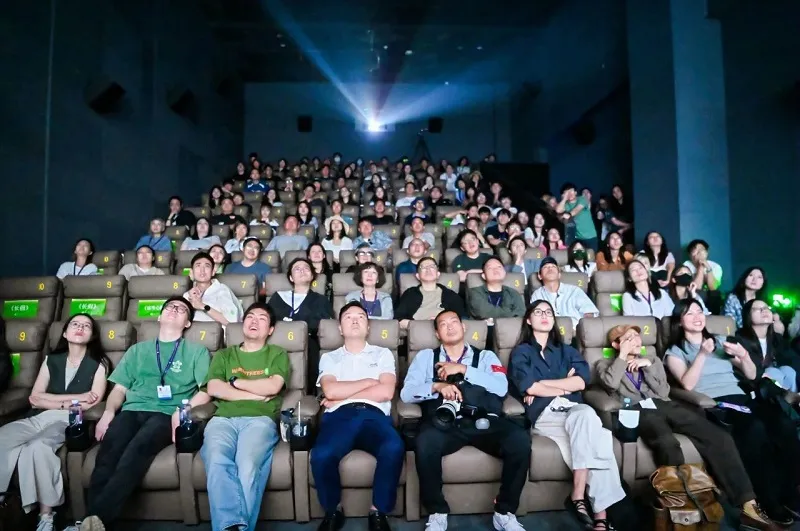
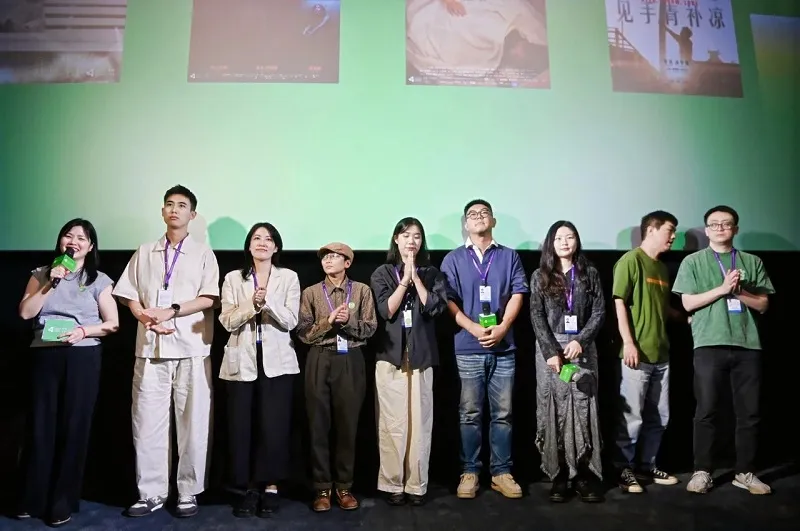
On December 8, the Young Coconut Project venture training camp industry internal screening and post-screening creator Q&A event was held at Xingyue Cinemas (Sanya Xiari Branch). Young Coconut Project jury member Liu Yanwenjun served as the post-screening moderator. Eight short films of diverse styles were showcased one by one, and the creative teams shared the stories and insights behind their creations.
Long Vacation
Reflecting growth amidst disaster through childhood memories
Directed by Shan Yijian, this work takes the audience on a journey of time filled with memories and emotional entanglements. The film originates from the director's unforgettable summer spent at a resort in Sanya during an earthquake in his childhood; the sense of detachment between his peaceful surroundings and the distant disaster became the source of his creation. Shan Yijian recalled, "That summer, while experiencing peace and happiness, I was also deeply concerned about the severe disaster happening in my hometown far away. This experience had a profound impact on my growth, so I wanted to capture those fragmented moments and memories from that time."
Producer Chen Linlin, a native of Haikou, Hainan, said excitedly: "I am deeply honored to be able to shoot this film in my hometown and receive the support of the Young Coconut Project at the Hainan Island International Film Festival (HIIFF). Moreover, I have been familiar with the environment here since I was a child, which provided a lot of convenience for production, including the great support from the director's friends and family during the filming process."
City Heart Thief
The philosophy of "pursuit" behind a love story
City Heart Thief takes love as its theme, displaying a unique charm under director Hong Zhenyi's distinctive interpretation. Director Hong Zhenyi shared the unique original intention: "Last year, while writing the script, I locked myself at home creating continuously, and suddenly I felt like I was falling in love, constantly 'chasing' something I could never catch: cinema. Later, I wanted to express this feeling of pursuit through images. I felt that the thing being chased had to be a person, and a dead person at that, so they could never be caught, which led to this love story. In fact, the 'pursuit' in this story can be substituted with anything, such as chasing a loved one or a dream career."
Producer Li Xiaoyuan recounted amusing incidents during the shoot: "We filmed in Haikou, and most of the film consists of night scenes, with only early morning for day scenes. When recruiting extras, things went smoothly at first; after posting the QR code for recruitment, over 160 people signed up in the group. We were even worried about having too many people, but when it came to the set, only a dozen or so showed up. Later, we had to arrange extras on the spot."
Screenwriter Liu Fang stated: "The filmed version added a lot of vivid dialogue, which I didn't expect. I cried while writing the script, and I cried again watching it today. I feel that the scene where the female lead sees someone who might be her lover downstairs, and the emotional outburst in the final scene, are particularly heartbreaking."
Actor Chubu Huajie said: "I am a good friend of the director. Before the project made the top 8, the director asked me to shoot something, and I agreed. I think the director is very cool and interesting in private, so what she writes must be cool too. Later, when I saw the script, it was indeed very interesting. We shot four all-nighters for this film, and I had a great time and thoroughly enjoyed the shoot."
Guanyin Hotel
Dream symbolism in a story of fate
Guanyin Hotel tells a story about fate, family, and choices. Filmed in Wenchang, Hainan, the film cleverly incorporates architectural elements such as Nanyang-style arcade buildings, creating a unique atmosphere for the story.
Director Xiao Qiancao revealed that the story prototype was his mother's experience when she was young: during his adolescence, his mother worked a part-time night shift at a hotel front desk to supplement the family income. One night, she encountered a woman holding a crying baby. Out of kindness, his mother provided the woman with food and lodging. Because of this act of kindness, the woman unexpectedly wanted to give the baby to his mother to raise the next day. After hesitating, his mother said she would go back to discuss it, but when she returned that night, both the woman and the baby had disappeared. Hearing this story when he was young, he didn't feel much, until he became a father himself two years ago and realized the fateful bond between parents and children, so he co-created this story with the screenwriter. This is his first time directing a narrative feature; having worked as a producer for over a decade, he reflected: "Having directed this time, as a producer, I will better understand the director's work in the future."
The film's producer Liu Shizhou stated: "Director Xiao is the teacher who brought me into the industry and a good brother to me for over ten years; he taught me all my producing skills. For this shoot, we had only one thought: to let him shoot well, to let him shoot to his heart's content, and I would take care of everything else."
Jianshouqing Buliang
Visual expression of loneliness and contemporary philosophy
Director Sun Huawei of Jianshouqing Buliang discussed the original intention during the post-screening Q&A: "Initially, I just wanted to write about the loneliness after a breakup, but during the creative process, I felt I could express more. Later, I realized that people protect their bodies when a storm comes and protect their hearts when a breakup occurs, but true protection is living in the present. That was how my thinking evolved."
Producer Wu Xinyi recounted the hardships of filming: "The shoot was quite difficult, mainly due to the weather. We were shooting a typhoon, but on the first day, when we needed clear skies, the weather was terrible. Due to various factors like the schedules of the deer and the actors, on the first day we struggled in the wind and rain for two or three hours before finally rolling the camera. On the second day, when shooting the final typhoon scene, the crew from all departments worked together to create the effects on the spot. Fortunately, the entire crew was very in sync, and everyone worked hard to overcome the difficulties and complete the shoot. Speaking of the deer, because sika deer are a national-level protected species, we are especially grateful to the Wanning Publicity Department, Department of Culture and Tourism, and Luwan Ranch. We contacted every deer park and department of culture, tourism, and publicity that we could reach in the entire province of Hainan before finally finding this ranch that could cooperate with the filming and allow the deer to be transported to Wenchang for the shoot. We even hired three deer handlers to assist with the filming. Additionally, we are very grateful to the Wenchang Municipal Publicity Department and the Longlou Town People's Government for their support of the filming."
The deer in the film also carries special symbolic meaning. Sun Huawei said, "The 'deer' symbolizes the girlfriend who left the male protagonist's memory, representing liveliness, instability, and cuteness. Hainan Island has an indissoluble bond with the 'deer'; Sanya is called Deer City, there is the legend of the deer turning its head, and in the Li ethnic text totems, there is also an expression using the small deer to refer to women. The original script contained related content, so the deer was kept."
Shoot When the Waves Come
A seaside journey exploring the mother-daughter relationship
Maierhaba, director of Shoot When the Waves Come, stated that this short film was created based on her reflections on mother-daughter relationships: "I had been conceiving a feature film about mother-daughter relationships for a long time. After some inspiration, I wanted to explore it through a short film first. The background of my story is by the sea, and seeing the 'Young Coconut Project' made me feel it was a great match for my project."
She also mentioned, "I had been thinking about this story for a long time and had a short film script last year, but there were still many revisions to the whole story before shooting began. Fortunately, the mentors of the Young Coconut Project gave me a lot of guidance, which helped immensely in refining the script."
Producer Zhang Puzhongtian introduced the filming location and the hardships during the shoot: "We filmed in an abandoned tropical forest garden in Wanning. On the very first day of shooting, we encountered a typhoon. We temporarily changed our shooting plan, scheduling the rabbit scenes for the first day. We also had to delay shooting for a day due to the typhoon, which added an extra day to our schedule. During the shoot, there was a violent wind and heavy rain, with branches constantly falling down. We originally wanted the art department to prepare a tree in advance to drop on the rabbit, but it turned out a real tree actually fell down, so we just utilized that exact scene."
A Certain Goldfish Died on a Certain Afternoon
The presentation of childhood memories and abstract dreams
Lu Helai, director of A Certain Goldfish Died on a Certain Afternoon, shared the story behind its creation at the post-screening Q&A: "The most original inspiration was my own childhood experience of flushing a goldfish down the drain. I have always remembered this incident and felt really bad about it."
Lu Helai has his own views on the film's presentation: "The film might be quite dull, but it truly tells what I want to say. However, I am quite satisfied with the little boy's dream. Casting was also crucial, and the shooting method avoided a lot of problems."
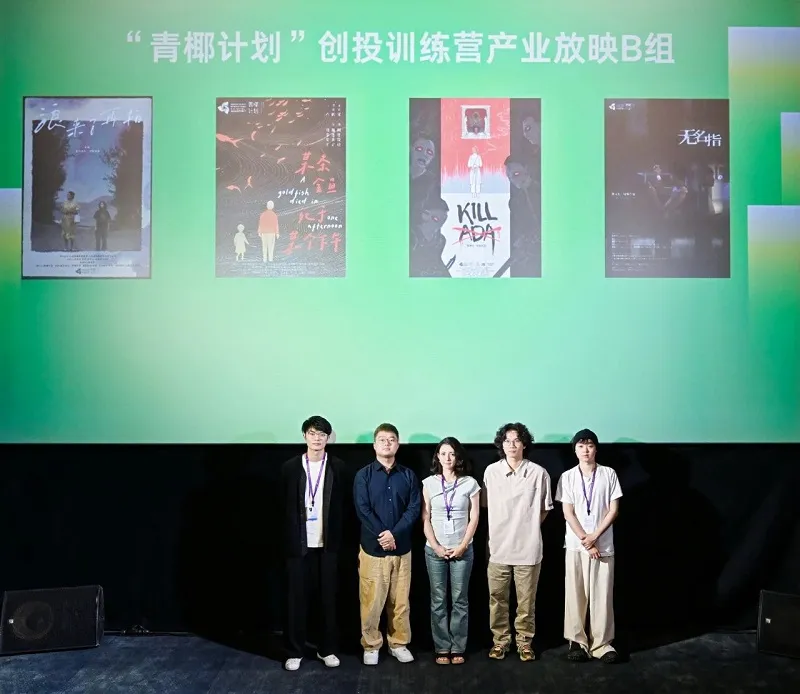
Kill Ida
The difficulties and breakthroughs of creating an action film
Cai Kunyu, director of Kill Ida, frankly stated, "The version screened today is not yet finished; editing, sound, and color grading were not done before I submitted it. This film originally had a 30-minute script, with five scenes at the beginning showing Ida's awakening as a housewife. However, because the budget only allowed for three days of shooting, after listening to the advice of teacher Nai'an and the director, I condensed the earlier scenes into one. Thinking about it now, this was the right decision; otherwise, it would have been impossible to finish in three days. This is my first time directing an action film. When I watched action films before, I always wanted the audience to know why the protagonist was fighting, so I paid a lot of attention to the dramatic scenes at the beginning. But after deleting them all and turning it into a single action scene, it became unclear why she was fighting. I am not very satisfied with the current version. If there is an opportunity later, I will look for funding to continue shooting."
He also introduced the collaboration during the shoot: "I am very grateful to director Sun Huawei for recommending Anna to me; without her, this film wouldn't exist. Anna has a very strong foundation in action scenes. We only spent two days rehearsing, but the final result exceeded expectations. I had finished all the storyboards before shooting and communicated with the action director about the action design. We wanted a realistic action style without too many split cuts. Everyone cooperated very well on set."
Producer Wang Hao shared the difficulties and efforts during the project: "After reading the script, I really wanted to make this film, but we encountered many difficulties during the shoot. Our budget was extremely tight, so I got deeply involved in every department, negotiating the budget item by item to control costs as much as possible. Fortunately, through everyone's efforts, we completed the film under pressure. I am truly very grateful to the core creative team for their support of our project."
Actor Anna stated, "I learned martial arts when I was a child, and later some combat sports. Cai Kunyu found me, and as soon as I read the script, I fell in love with this character because she has many facets and has her own emotions within the action, unlike many female action characters who are so one-dimensional. I am very happy to have made this film with Kunyu."
The Ring Finger
A visual commemoration of the floating population's experiences
Huang Wenli, director of The Ring Finger, explained the reason for creation during the post-screening exchange: "I feel that as a director who is not yet well-known, I need to have a reserve of scripts. I wanted to write a short film script that could separate the phases of my life. I am from Guangdong, but growing up in Guangzhou, I was considered an outsider. When I was young, my friends were unstable; if a factory laid off workers, they had to move, and there was never a formal farewell with friends. So I wrote this story set over one night to commemorate those farewells."
The severed finger plot in the story is related to factory life, while the 'ring finger' symbolizes those seemingly useless friendships that carry promises, representing those easily forgotten yet incredibly precious bonds. Huang Wenli said, "The ring finger seems to be the most useless of the fingers, but it also represents a promise, just like those nameless friends from our childhood. Losing them might seem like it doesn't matter, but they are actually very important to me."
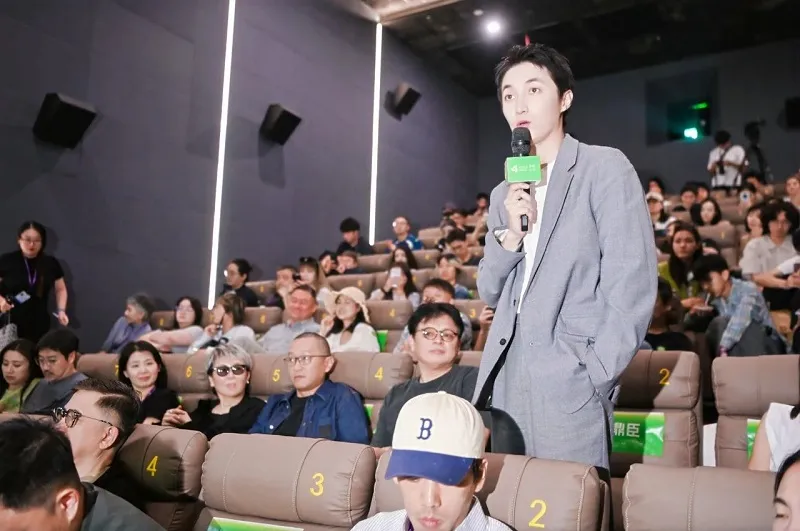
Mentors and judges of the 'Young Coconut Project', along with Young Coconut Recommender Xiao Dingchen, also attended the screening. They affirmed the efforts and creativity of the young filmmakers, while also offering valuable suggestions, hoping that the young creators of the 'Young Coconut Project' will continue to grow on their future filmmaking journeys and create more outstanding works.
This 'Young Coconut Project' Creative Training Camp event provided young filmmakers with a rare opportunity for showcase and creative support. The eight short films demonstrated their talent and reflections from various perspectives, injecting new vitality into the development of the film industry.